In NSW, the switch to workplace exposure limits has two dates, not one.
The first comes from SafeWork NSW's workplace exposure standards page. Workplace exposure limits (WELs) for airborne contaminants replace the workplace exposure standards (WES) on 1 December 2026, and until then you must keep complying with the current WES.
The second comes from a NSW Government release, Phosphine regulations delayed following consultation with grain producers, published on SafeWork NSW on 28 October 2026. Read the two together and the NSW calendar looks like this:
- 1 December 2026: the WEL list starts, and so does an interim limit for diesel particulate matter.
- 1 July 2028: the new WELs for phosphine and diesel particulate matter start.
There is a long tail too. Records of air monitoring must be kept for 30 years. A result taken in December 2026 stays on your file until December 2056 (our working: 2026 plus 30 years).
So the advice from SafeWork NSW is plain. Review your controls as soon as possible and work out what needs to change before 1 December.
What are workplace exposure limits (WELs) for airborne contaminants?
Airborne contaminants are the dusts, gases, fumes, vapours or mists that some work processes release into the air. An exposure limit caps how much of a contaminant a worker can breathe in over a set period, such as a working day.
The new name is deliberate. SafeWork NSW says the change makes clear these are limits that should not be exceeded and brings Australia into line with international terms. WHS ministers agreed to the rename in 2018 and to the revised list in April 2024.
The old list was overdue for a rethink. The WES were first adopted in 1995 and last comprehensively reviewed in 2003. The WEL list came out of a 2024 review of the scientific justification behind the limits.
Which parts start on 1 December, and which wait until 2028?
Source: SafeWork NSW, SafeWork NSW release
WELs are set nationally by Safe Work Australia, and the states and territories implement them. That is how NSW can stage parts of a national change.
Two contaminants have a different path in NSW, according to the NSW Government release:
- Phosphine: the new WEL now commences on 1 July 2028. The release followed consultation with grain producers.
- Diesel particulate matter: an interim exposure limit starts on 1 December 2026, and the new WEL starts on 1 July 2028.
Diesel matters to the people who read this site. Depots, workshops and warehouses where engines run indoors are where diesel particulate builds up. If that describes your site, you have a limit to meet from 1 December, just not the final one.
Is it just a new name? Some limits change
No. Safe Work Australia's revised list, as summarised by the offshore regulator in Workplace exposure limits changing 1 December 2026, includes changes to limits for some airborne contaminants, new listings and updated advisory notations. A substance you checked years ago may now have a different number, or a number where it had none.
Source: SafeWork NSW
Welding shows how far one number can move. The exposure standard for welding fumes not otherwise classified, and for aluminium welding fumes, was reduced from 5 mg/m³ to 1 mg/m³ as an 8-hour time-weighted average (TWA). That puts the limit at one-fifth of the old figure (our arithmetic: 1 ÷ 5). Controls that kept a bay comfortably under the old number may not keep it under the new one.
Welding fumes (NOC) 8-hour TWA:
reduced from 5 mg/m³ to 1 mg/m³
P2/P3 particulate filters do not protect against gases such as ozone or nitrogen oxides.
Source: SafeWork NSW
The respirator on the hook is not the whole answer either. SafeWork NSW notes that P2/P3 particulate filters do not protect against gases such as ozone or nitrogen oxides, which welding can also produce.
Where do airborne contaminants show up at work?
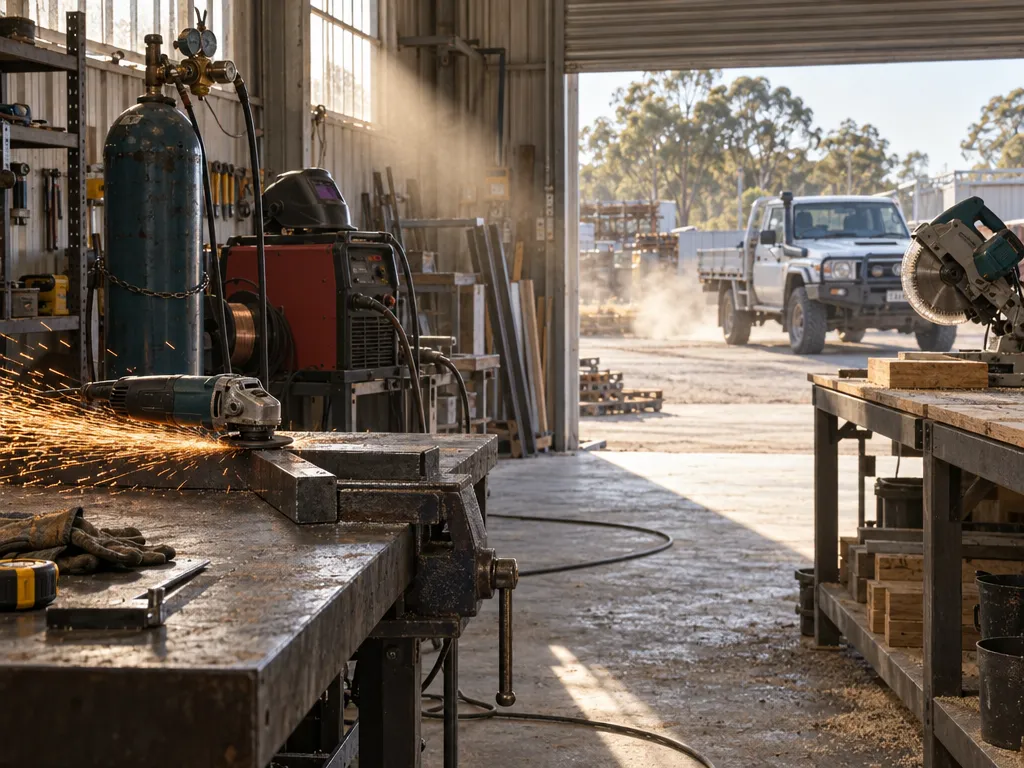
The ACT regulator, writing about the same national change, lists everyday sources in its WES/WEL transition guidance: grinding metal, welding, applying pesticides, mixing chemicals, and cutting stone or timber. It names construction, manufacturing, cold storage and automotive as likely to be most affected. It also says any workplace with airborne contaminants should review.
Around Newcastle, that covers a lot of ordinary sites:
- a fabrication shop with a welding bay
- a panel shop spraying paint
- a workshop with a solvent parts washer
- a transport yard where trucks idle inside the shed
- a pool shop decanting and storing chemicals
- a store room where open containers give off vapour
Your starting list is already on file. The hazardous chemicals register you keep for each site lists what is used, stored and handled. Our guide to the chemical register, safety data sheets, manifests and placards explains what that register should hold. Remember that some contaminants never come in a container: welding fume, stone dust and diesel exhaust are made by the work itself.
Your checklist before the new limits start
Before the new limits start
The regulators' advice lines up into a short list.
- Review the revised list. Read the revised WEL list, identify the contaminants you use or generate, and check whether the changes affect your risk assessments, monitoring and controls. Then verify those controls still work. That is the checklist in Workplace exposure limits changing 1 December 2026.
- Look up each substance. Go through your chemical inventory for affected substances. Safe Work Australia's Hazardous Chemical Information System (HCIS) shows hazard classifications and exposure limits, as the WES/WEL transition page points out.
- Update your paperwork and talk to your people. The same ACT guidance says to update risk assessments, safety data sheets and safe work procedures, and to consult workers and any health and safety representatives.
- Check substances with no listed limit. A substance with no specific exposure standard may still be harmful. SafeWork NSW says to check international standards and keep exposure to a minimum.
- Treat some carcinogens differently. For non-threshold genotoxic carcinogens, the guidance is to manage exposure as low as is reasonably practicable (ALARP), using the hierarchy of controls.
You don't have to work it out alone. The NSW release says SafeWork NSW is providing a stakeholder kit and business toolkits and is sending information through its monthly newsletter. Safe Work Australia has also published a Guide for PCBUs on air monitoring and the WELs, a technical guide for hygienists, and a guide to managing diesel engine emissions, as named on the WES/WEL transition page.
Air monitoring and health monitoring: who does what?
| Task | Who carries it out | The rule |
|---|---|---|
| Air monitoring | a person with relevant qualifications and experience, such as an occupational hygienist | required when you are unsure whether the exposure standard has been exceeded, or when needed to determine whether there is a risk to health |
| Personal exposure monitoring under the new WELs | as above | must be done for a chemical where you are unsure whether a worker's exposure exceeds the new WEL |
| Health monitoring | a registered medical practitioner with relevant experience | organised and paid for by the PCBU |
| Monitoring records | kept by the business | kept for 30 years; results go to anyone who had personal monitoring and anyone who has been, or might be, exposed (WHS Regulation 2025, sections 49 to 50) |
Source: SafeWork NSW WES page, SafeWork NSW airborne contaminants page
These are two different jobs, done by two different professionals.
Air monitoring measures what is in the air a worker breathes. It must be carried out when you are unsure whether the exposure standard has been exceeded, or when it is needed to determine whether there is a risk to health. Under the new limits, if you are unsure whether a worker's exposure exceeds the new WEL, personal exposure monitoring for that chemical must be done.
An occupational hygienist can advise whether monitoring is likely to be needed. The monitoring itself should be done by a person with relevant qualifications and experience, such as an occupational hygienist.
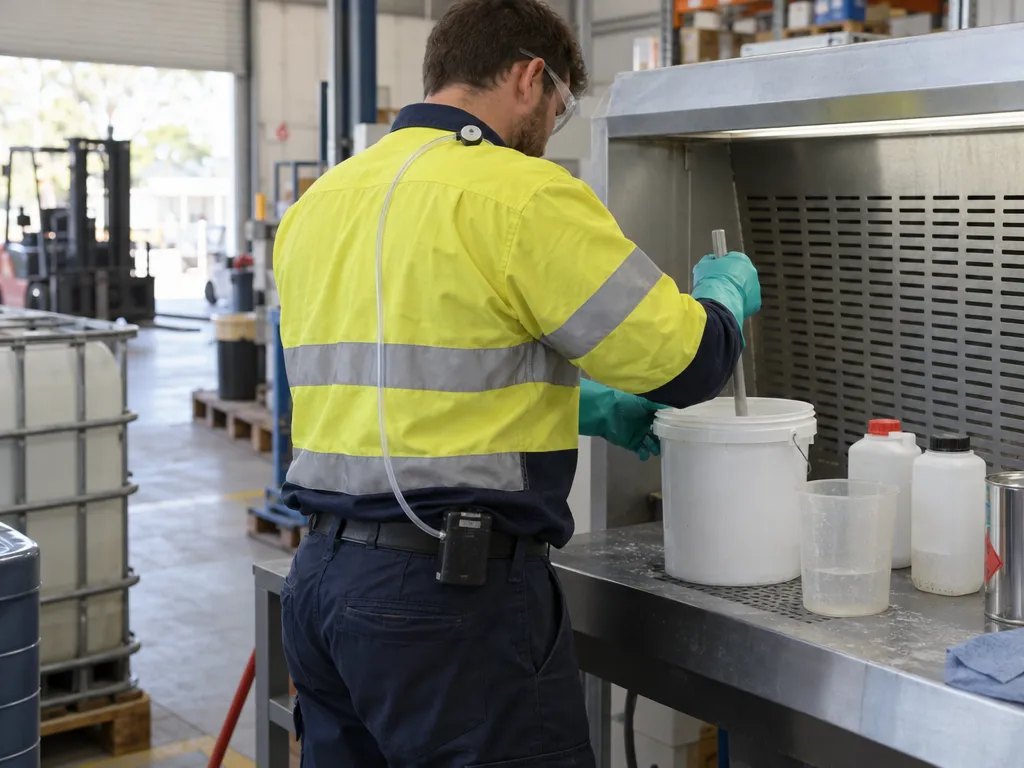
Health monitoring checks the worker, not the air. It should be done by a registered medical practitioner with relevant experience.
The records last a working lifetime. Atmospheric monitoring records must be kept for 30 years. Results must go to anyone who had personal monitoring and to anyone who has been, or might be, exposed. SafeWork NSW cites sections 49 to 50 of the Work Health and Safety Regulation 2025. File them where a successor in your role will find them.
What do people get wrong about exposure limits?
Each day's 8-hour TWA is judged on its own, even if the other days comply.
Source: SafeWork NSW
"One bad day can be averaged out over the week." It can't: SafeWork NSW says the daily 8-hour TWA cannot be exceeded, even if the other days comply.
"One sample proves we're fine." It rarely does: SafeWork NSW says a single "like for like" sample is very unlikely to be enough, because exposure is rarely constant and monitoring may be needed over several days or at different times of the year. There is some relief where the same task is done elsewhere. If enough data was collected, the assessment may be extended to workers at another site doing the same task or process.
"The worker pays for their own medical." Health monitoring is organised and paid for by the PCBU, the person conducting the business or undertaking. In most small workplaces that means the employer.
The new limits at a glance
Example of a cut limit:
welding fumes (NOC) 8-hour TWA, 5 mg/m³ to 1 mg/m³
- WELs replace WES on 1 December 2026. The current WES apply until then.
- NSW diesel particulate matter: interim limit from 1 December 2026, new WEL from 1 July 2028.
- NSW phosphine: new WEL from 1 July 2028.
- Air monitoring records: kept for 30 years.
- An example of a cut limit: welding fumes (not otherwise classified), from 5 mg/m³ to 1 mg/m³ as an 8-hour TWA.
Exposure limits and dangerous goods licences are separate jobs
Here is where we would draw the line for our own readers.
Exposure limits are about the air your workers breathe on site. They are not about who may drive a placarded load. Nothing in the WEL change alters whether someone needs a dangerous goods driver licence, a vehicle licence, or both. Our page on driver licence vs vehicle licence in NSW covers that question.
Still, a WEL review often turns up the same chemicals that someone in the business also stores, loads or carries. If it does, that is a good moment to check your team's training. Our guide to licence vs awareness courses sets out which suits whom.
If you're unsure which applies to your crew, send Dangerous Goods Licence Newcastle a short note about what you handle and who handles it through our contact page. We'll point you to the right training.
Sources
- https://www.safework.nsw.gov.au/resource-library/hazardous-chemicals/workplace-exposure-standards
- https://www.safework.nsw.gov.au/hazards-a-z/hazardous-chemical/airborne-contaminants
- https://www.safework.nsw.gov.au/hazards-a-z/welding-fumes
- https://www.safework.nsw.gov.au/news/safework-media-releases/phosphine-regulations-delayed-following-consultation-with-grain-producers
- https://www.nopsema.gov.au/blogs/workplace-exposure-limits-changing-1-december-2026
- https://www.worksafe.act.gov.au/health-and-safety-portal/safety-topics/dangerous-goods-and-hazardous-substances/weswel-transition
Build the right foundations
Ask about dangerous goods training in Newcastle for you or your team.