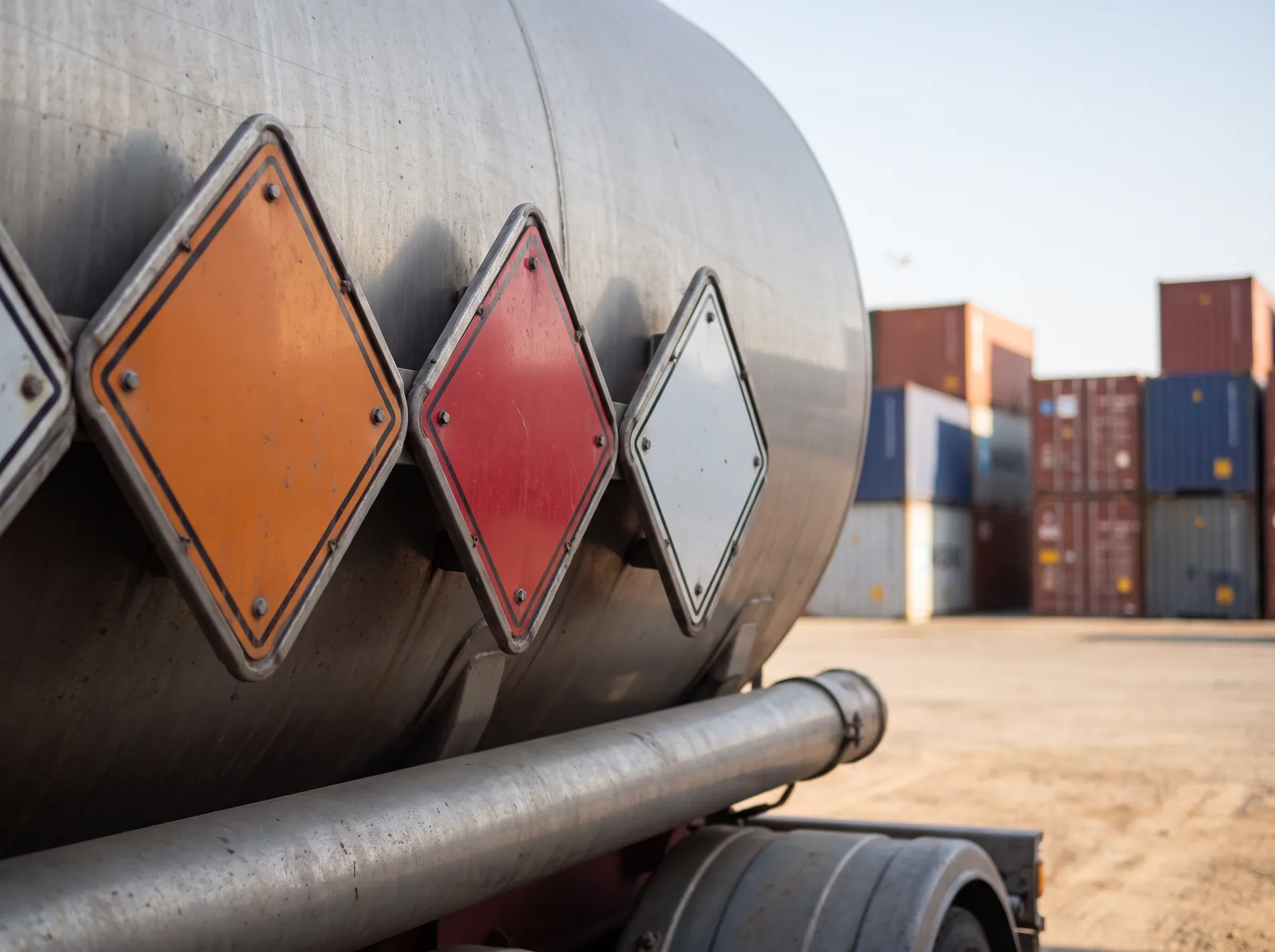
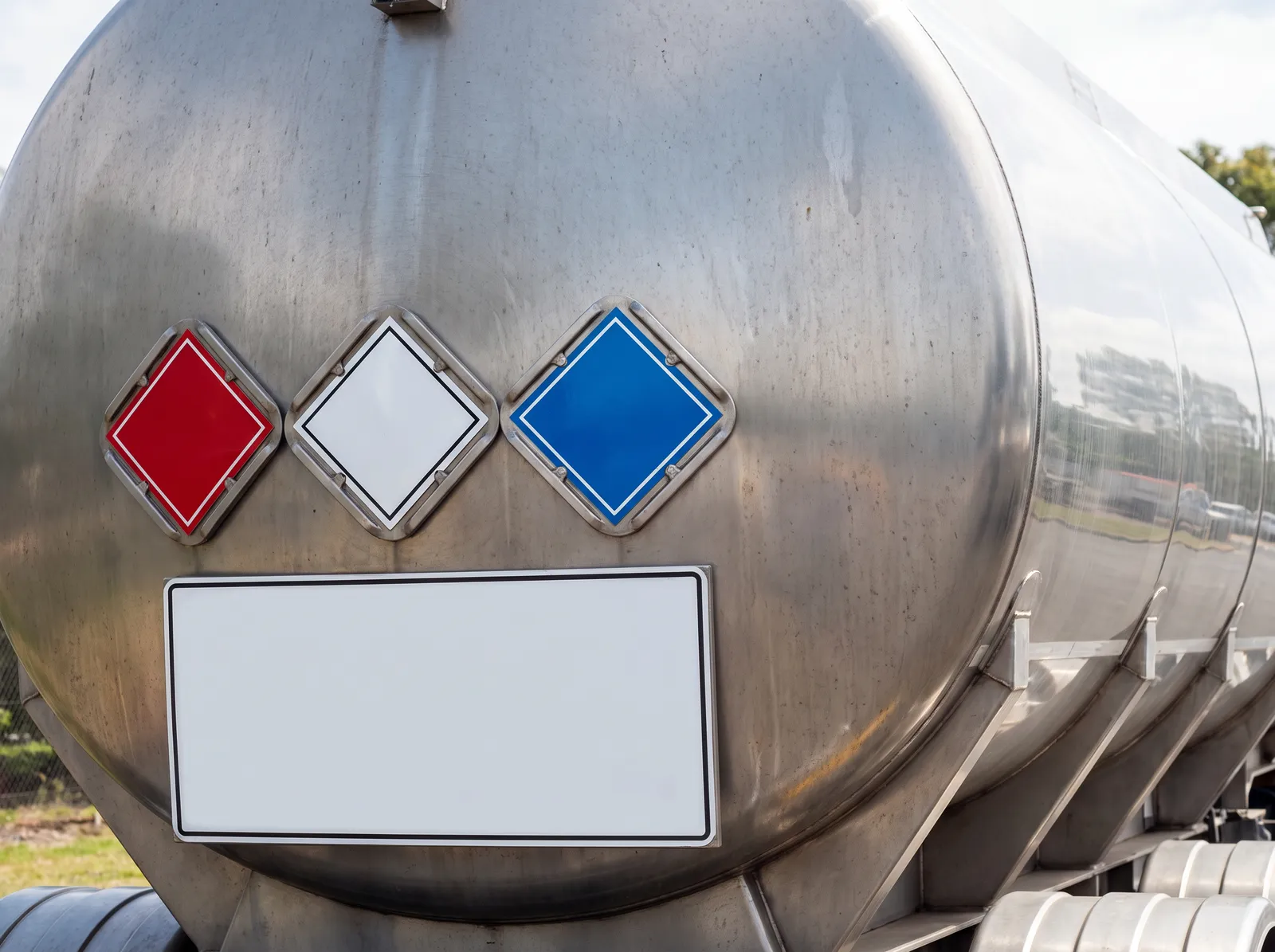
If you carry dangerous goods in any one container with a capacity over 500 litres, or more than 500 kilograms of them in one container, NSW asks for two licences, not one, unless the IBC exemption below applies. The dangerous goods driver licence is about the person behind the wheel. The dangerous goods vehicle licence is about the vehicle. EPA NSW states the trigger in the same words on both pages, so the same load switches both on at once.
The trouble is the name. "Dangerous goods licence" gets used for either one. A business can sort out its driver and believe the job is done. Here is how the two fit together, and why the vehicle side needs more of your calendar.
Two licences for two different things
Source: EPA NSW, Service NSW
Every load raises two separate questions. Is this person licensed to drive it? Is this vehicle licensed to carry it?
The driver licence answers the first question. It sits with the individual.
The vehicle licence answers the second. It sits with the vehicle, and for a tanker the tank itself is part of the evidence EPA asks to see.
So the honest answer to "which one do I need?" is often both. A licensed driver in an unlicensed vehicle still leaves a gap. So does an unlicensed driver in a licensed tanker. If you want to know what that gap can cost, our page on penalties for transporting dangerous goods without the correct licence covers it.
What switches both licences on: one receptacle over 500 L or 500 kg
Service NSW sets the line plainly. You need a driver licence to transport dangerous goods in a receptacle with a capacity of more than 500 litres, or if there is more than 500 kilograms in a receptacle, according to its Apply for a dangerous goods driver licence page. EPA NSW uses the same wording on both its driver licence page and its vehicle licence page: at that threshold, both licences are required.
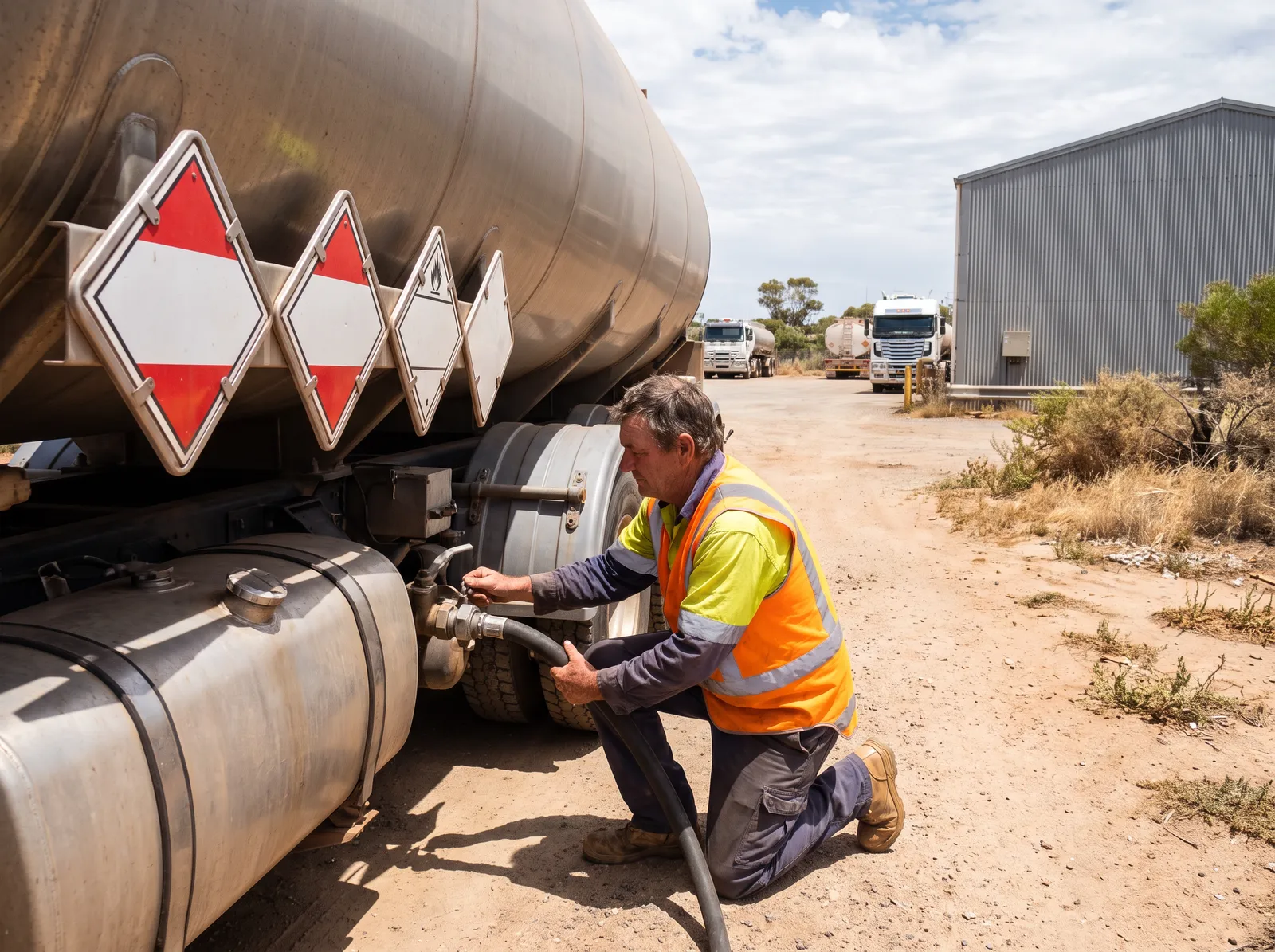
The word doing the work is "receptacle". EPA NSW defines it as the container that holds the substance or article and is in contact with it, on its vehicle licence page. The tank on a tanker is a receptacle. One exemption matters: EPA says neither licence is required if the dangerous goods are in IBCs, the total capacity of the IBCs on the vehicle is no more than 3000 litres, and no IBC is filled or emptied while on the vehicle.
The threshold is written around the container, not the truck. If your load is a mix of containers in different sizes, read EPA's wording against what you actually carry before you assume either way. This line decides licences only. It is not the whole of the transport rules, and our page on common mistakes when handling dangerous goods in transport covers more of the day-to-day side.
Receptacle: the container holding the goods and in contact with them (EPA NSW)
Source: Service NSW, EPA NSW
Side by side: who each licence covers, how long it lasts, what EPA charges
| Driver licence | Vehicle licence | |
|---|---|---|
| Covers | The person | The vehicle |
| Trigger | Dangerous goods in a receptacle over 500 L capacity, or over 500 kg in one receptacle, the same for both | |
| Valid for | 5 years | 1 year |
| EPA application or renewal fee, 2026-27 | $66 | $101 |
| Other EPA fees, 2026-27 | None listed | Additional vehicle $101, replacement of vehicle $27, tank design approval $397 |
| Evidence asked for tank vehicles | n/a | Hydrostatic test date if applicable, tank compliance plate image, RSS details for heavy tank trailers |
| Applied for in | EPA eConnect | EPA eConnect, as a separate action |
The two licences run on different clocks and different fees. On EPA's published fees for the 2026-27 financial year:
- The driver licence runs for 5 years, and the application or renewal fee is $66.
- The vehicle licence runs for 1 year, and the application or renewal fee is $101.
- On the vehicle side, EPA also lists $101 for an additional vehicle, $27 for a replacement of vehicle and $397 for a dangerous goods tank design approval.
Government fees are indexed from time to time. Treat these as today's figures and check EPA's pages before you pay.
EPA dangerous goods licence fees, 2026-27
Government fees are periodically indexed. Check EPA NSW before paying.
Source: EPA NSW
Why the vehicle licence needs your attention every year
Five years against one year is the difference that catches people out. A driver renews once in the time a vehicle renews five times. The vehicle licence is the one that slips if nobody owns it.
Source: EPA NSW
Here is what that means in dollars. Our estimate, using today's EPA fees and assuming they never change:
- Driver licence over five years: one fee of $66.
- One vehicle over the same five years: five annual fees of $101, which is 5 × $101 = $505.
Real figures will differ as fees are indexed. The point holds, though: most of the renewals, and on our estimate most of the fee cost, sit on the vehicle side.
Our practical advice at Dangerous Goods Licence Newcastle is to give each licence its own owner and its own reminder. Put the vehicle licence in the same diary as your other annual vehicle paperwork. For the driver's five-year cycle, our guide on how often to renew your dangerous goods licence in NSW walks through the driver side.
What a tank vehicle licence application asks for
For tank vehicles, EPA asks for evidence about the tank itself. Its vehicle licence page lists:
- the date of the last hydrostatic test, if applicable
- an image of the tank compliance plate showing a valid design approval number and the tank serial number
- for heavy vehicle tank trailers, details of the roll stability system (RSS)
That last item is not optional. EPA states that RSS is mandatory for all dangerous goods heavy vehicle tank trailers operated in NSW.
Have these ready for a tank vehicle licence application
Look at what is missing from that list: nothing on it is about training. A vehicle licence is a vehicle compliance task. It is answered with registration details, insurance, plates, test dates and equipment details, not with a certificate from a course. EPA also requires an insurance policy for the vehicle with a minimum of $5,000,000 cover for clean-up and emergency services costs.
Both are managed in eConnect, as two separate applications
Both licence types are applied for, renewed and managed through EPA NSW's eConnect online system. EPA's dangerous goods overview lists them as separate actions.
Apply for a Dangerous Goods driver licence
Apply for a Dangerous Goods vehicle licence
One system, two applications. Finishing the driver application does not start the vehicle one. If your business runs its own tanker, expect to work through both.
Your next step
EPA NSW issues both licences. We do not, and no training provider does. What Dangerous Goods Licence Newcastle can help with is the driver side: the training information behind a dangerous goods licence course in Newcastle.
If you handle dangerous goods at work but do not drive them, our page on licence vs awareness courses will help you work out which suits you.
Not sure which side you need? Tell us what you carry and in what containers through our contact page, and we will point you to the course information that fits.
Sources
- https://www.service.nsw.gov.au/transaction/apply-for-a-dangerous-goods-driver-licence
- https://www.epa.nsw.gov.au/Your-environment/Dangerous-goods/licensing-training/driver-licence-dangerous-goods
- https://www.epa.nsw.gov.au/Your-environment/Dangerous-goods/licensing-training/vehicle-licence-dangerous-goods
- https://www.epa.nsw.gov.au/Your-environment/Dangerous-goods/dangerous-goods-nsw-overview
Pictures in this guide are illustrations, not photos of our jobs.
Need to get licence-ready?
Talk to us about TLILIC0001 training in Newcastle and we will help you plan your dates.