Accredited training gives workers the foundation they need to handle hazardous materials safely and legally. But what happens six months later, when someone needs to verify a placard requirement or confirm the right procedure for a spill? That is where support materials earn their keep. Handbooks, checklists and reference guides turn a one-off training event into something workers can rely on day to day. This article covers what those materials should include, how they are best used, and what to look for when choosing a training provider.
Why support materials matter beyond the classroom
Even well-delivered training fades. That is not a criticism; it is just how memory works. Workers handling dangerous goods face real consequences if they misremember a classification, skip a check or respond incorrectly to a spill, and good reference materials reduce that risk. A training handbook reinforces what was covered in the course, but in a format workers can pick up and use on the job: clear summaries of regulatory requirements, hazard class definitions, labelling rules and practical scenarios, not a dense document that sits in a drawer. Materials that reflect your specific operation are far more likely to get used than generic resources that do not quite fit. In Australia, the Australian Dangerous Goods Code sets out classification, labelling and transport requirements, and effective handbooks either include relevant extracts or summarise the key points clearly.
What a dangerous goods handbook should cover
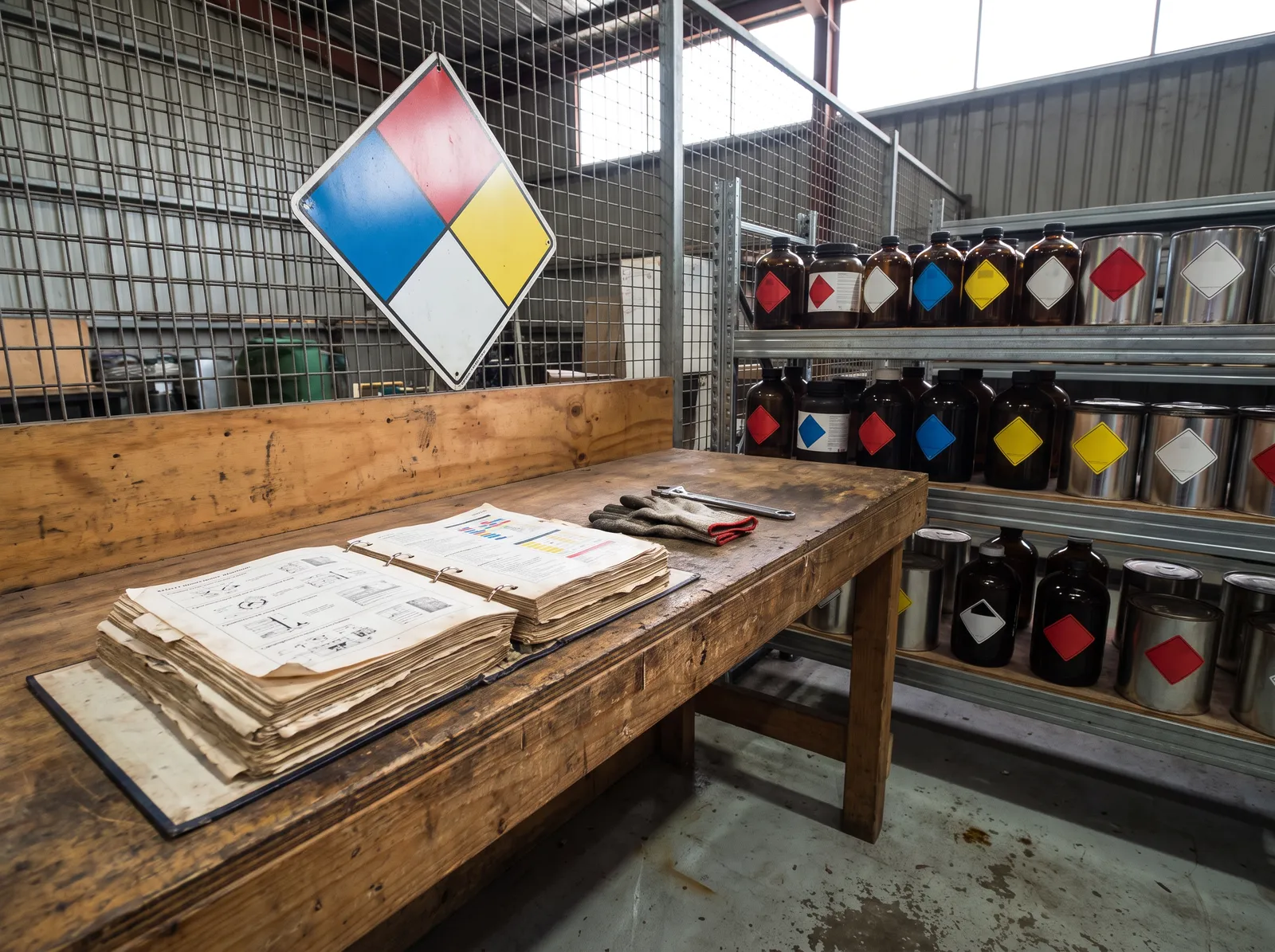
At a minimum, a useful handbook covers how to identify and classify hazardous materials. Workers need to recognise hazard classes through labels and UN numbers quickly and confidently. Good handbooks also explain what hazard symbols mean in plain language, clarify the difference between dangerous goods and other hazardous substances, and provide an overview of the WHS legislation that applies. Real workplace scenarios help considerably, because abstract rules become easier to apply when they are anchored to real situations. The handbook should also direct workers to safety data sheets (SDS), which list substance-specific hazards, safe use instructions and emergency procedures.
Checklists: simple, but worth getting right
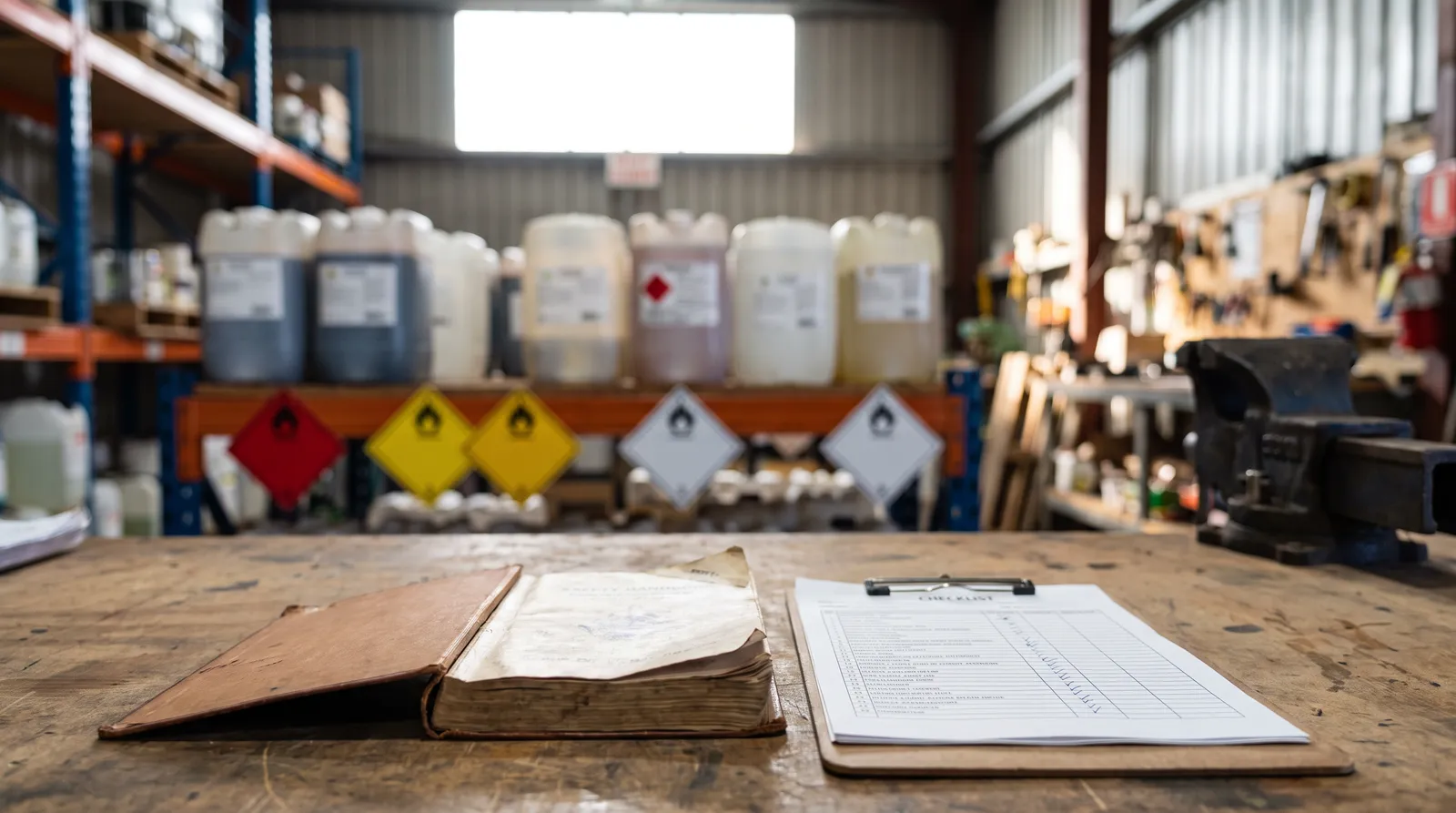
A well-designed checklist is one of the most practical tools a workplace can have. It does not require workers to hold everything in their heads; it prompts them to verify the right things at the right time. Handling checklists typically cover labelling verification before a container is moved, PPE availability, and segregation of incompatible goods. Storage checklists confirm that spill kits are stocked, signage is in place, and fire suppression equipment is accessible and current. Transport teams benefit from a pre-trip checklist covering placard correctness, documentation accuracy and driver competency records. Visibility matters too: checklists posted near storage areas or in vehicles get used, while checklists filed in a folder do not.
Emergency response guides and practical tools
Workers need to know what to do in the first minutes of an incident, before anyone has time to look anything up. A good emergency guide covers immediate action steps for a spill, leak or exposure event: what to do, what not to do, who to contact and what to record. It should be short enough to be useful under pressure. Beyond emergency guides, incident report forms and hazard identification templates help standardise how information is captured, which matters during audits and for spotting patterns early. For larger operations, digital versions of checklists and handbooks ensure workers always have the current approved version.
Keeping materials current
Regulations change. The Australian Dangerous Goods Code is updated periodically, and WHS legislation continues to evolve. Support materials that were accurate two years ago may not reflect current requirements. Training providers should have a clear process for updating handbooks and checklists when regulations change, and workplaces should ask about this before signing up. It is also worth building a review cycle into your own safety management. New staff are a particular consideration: a clear set of reference documents helps them settle into safe practices faster than relying on verbal handover.

Choosing a provider: what to ask about materials
The quality of support materials is a reasonable indicator of how seriously a training provider takes long-term outcomes over compliance tick-boxes. When evaluating providers, ask not just whether materials are provided, but whether they are current, site-specific and written for practical use. Some providers tailor materials to specific sectors, such as transport, warehousing or industrial manufacturing. Detailed, practical FAQ-style resources are a useful example of how information can be structured for workers, and the same principle applies to dangerous goods reference materials. Strong documentation also helps when auditors arrive: a well-maintained set of handbooks and checklists shows that safety is an ongoing priority.
Frequently asked questions
What are the must-have support materials for dangerous goods training?
At minimum, a training handbook, a hazard identification guide, handling and storage checklists, and an emergency response document. Transport operations should also have a pre-trip checklist specific to their vehicles and goods.
Why are checklists important in dangerous goods training?
They reduce reliance on memory for safety-critical steps. A checklist does not forget things when someone is in a hurry, which is exactly when errors happen.
How do handbooks support post-training learning?
They give workers a reliable reference for regulations, classifications and procedures. Most people retain the general concepts but need a resource to verify specifics when it counts.
Can support materials help with workplace compliance?
Yes. Well-maintained handbooks and checklists that align with current regulations make audits more straightforward and show that safety goes beyond initial training.
Training that stays useful
Ask us about dangerous goods courses in Newcastle and the materials that come with them.